Where intelligent bodies meet learning brains
We pursue soft robots whose physical bodies and AI brains co-evolve — spanning materials, manufacturing, electronics, modeling, and learning.
Embodied AI for Soft Robots
Reinforcement learning and control that exploit body dynamics for agile, robust locomotion and manipulation.
Physics-Informed AI
Sim-to-real and surrogate models grounded in mechanics for data-efficient, generalizable control.
Mechanical Intelligence
Smart structures that compute, sense, and adapt — offloading intelligence into the body itself.
Programmable Shape Morphing
Array-based actuators and machine learning for universal, controllable 3D shape transformation.
Advanced Manufacturing
3D printing and direct-ink-writing of multifunctional soft actuators, sensors, and electronics.
Flexible Electronics & Sensing
Integrated, fabric-embedded sensing and actuation for adaptive, wearable, and bio-integrated systems.
Full-envelope amphibious locomotion with a morphing robotic turtle
LUART (Learning Untethered Amphibious Robotic Turtle) actively morphs its limbs between inflated, stiff legs for walking and deflated, flat flippers for swimming, so a single robot can move on land, in water, and across the transition between them.
Softness surrogates in rigid simulation
Effective leg length and friction encode soft limbs in a rigid-body simulator, and body-height control compensates for softness, giving agile, adaptive gaits with real-time cost-of-transport (COT) monitoring.
Deep, agile, learned swimming
Pressure-regulated waterproof hardware works from the surface to 10 m depth. Gaits are learned with reinforcement learning from hand-designed seed gaits, moving toward full 3D attitude and speed control.
Energy-aware morph planning
Morph–Energy–Path–Gait (MEPG) planning decides where and when to morph, minimizing the total energy of a route, including the transitions themselves.
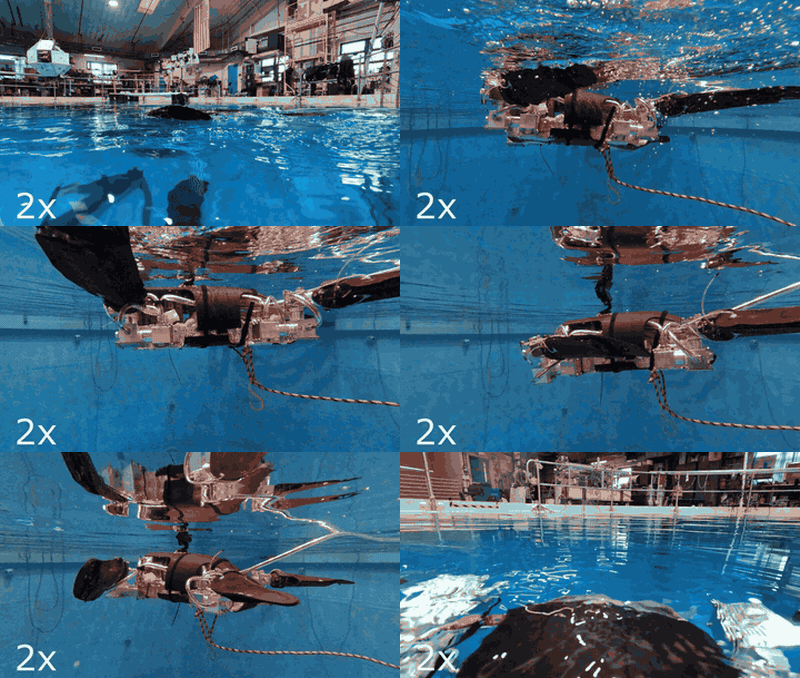 Amphibious robotic turtle — learned locomotion (RL + sim2real)
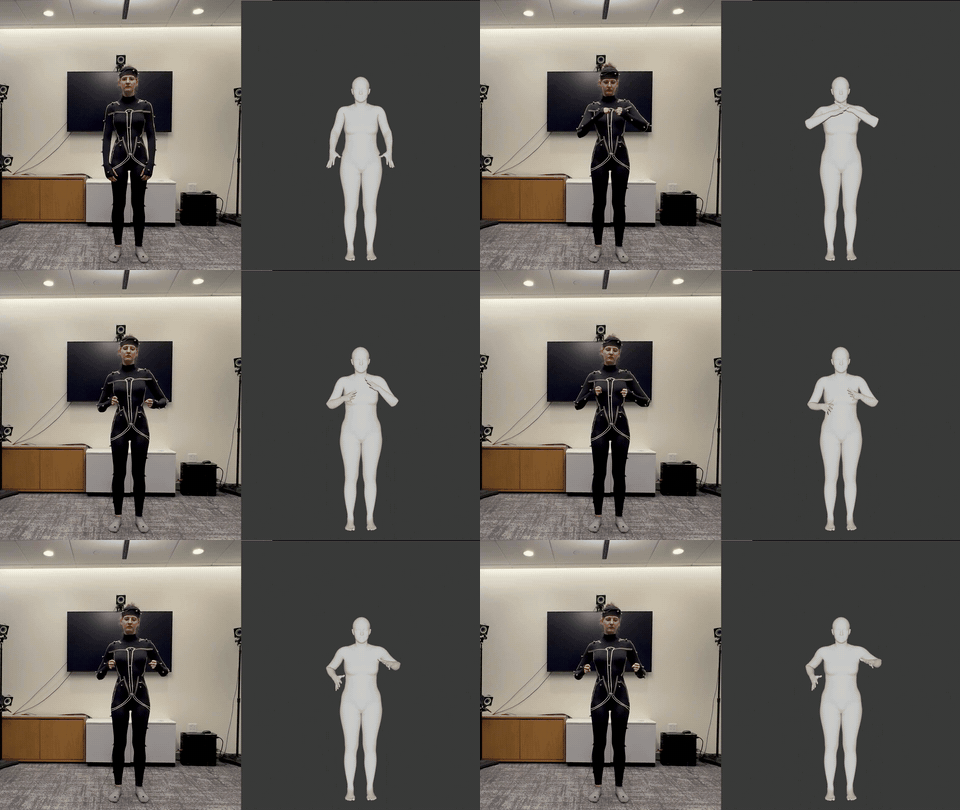 Calibration-free fabric wearable motion capture
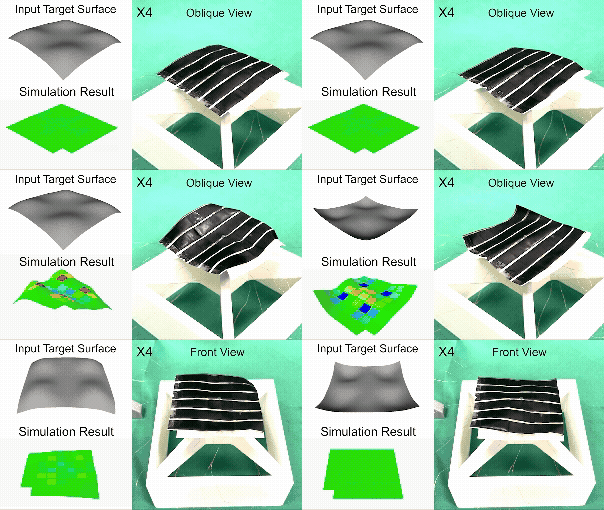 Programmable shape-morphing surfaces
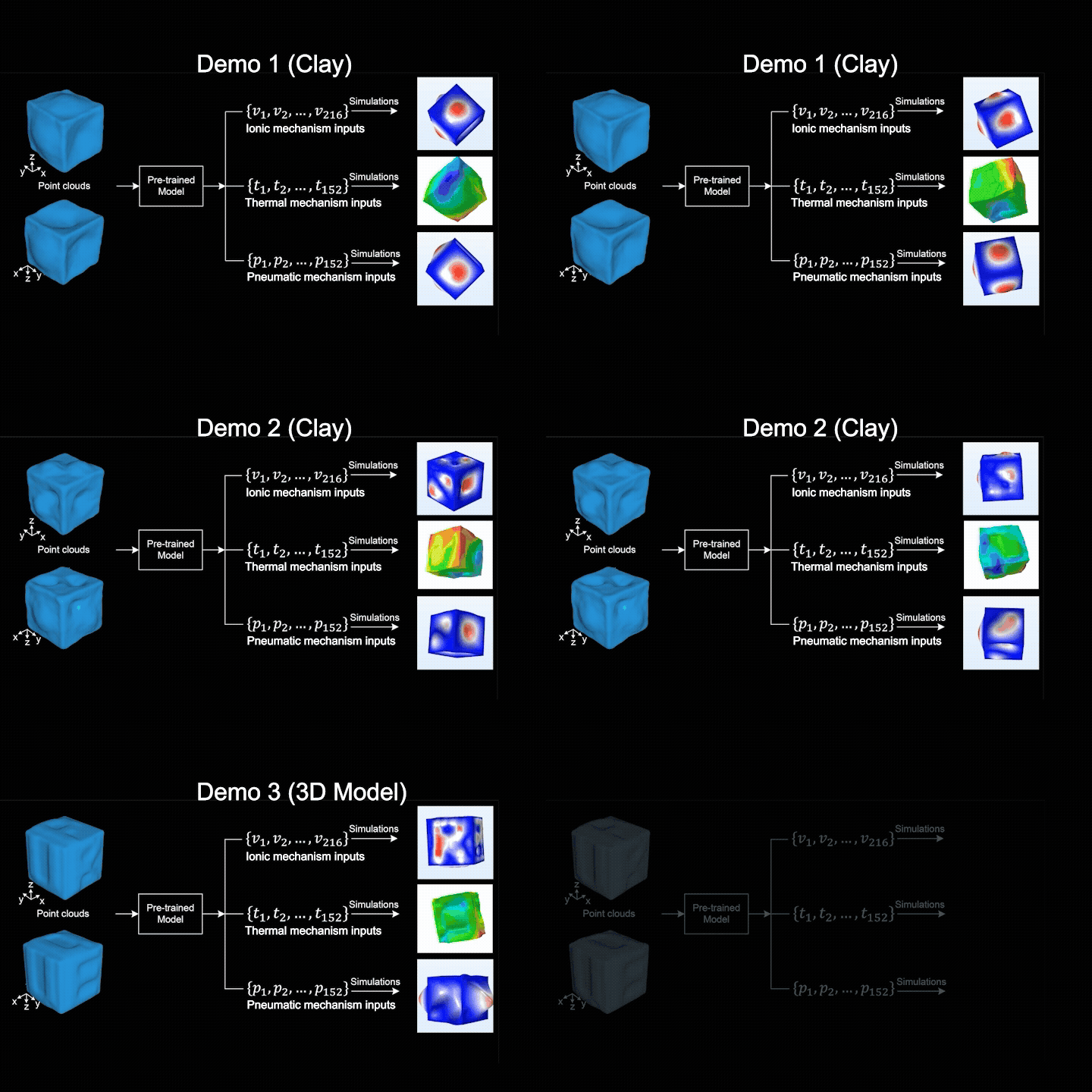 Machine-learning–controlled morphing
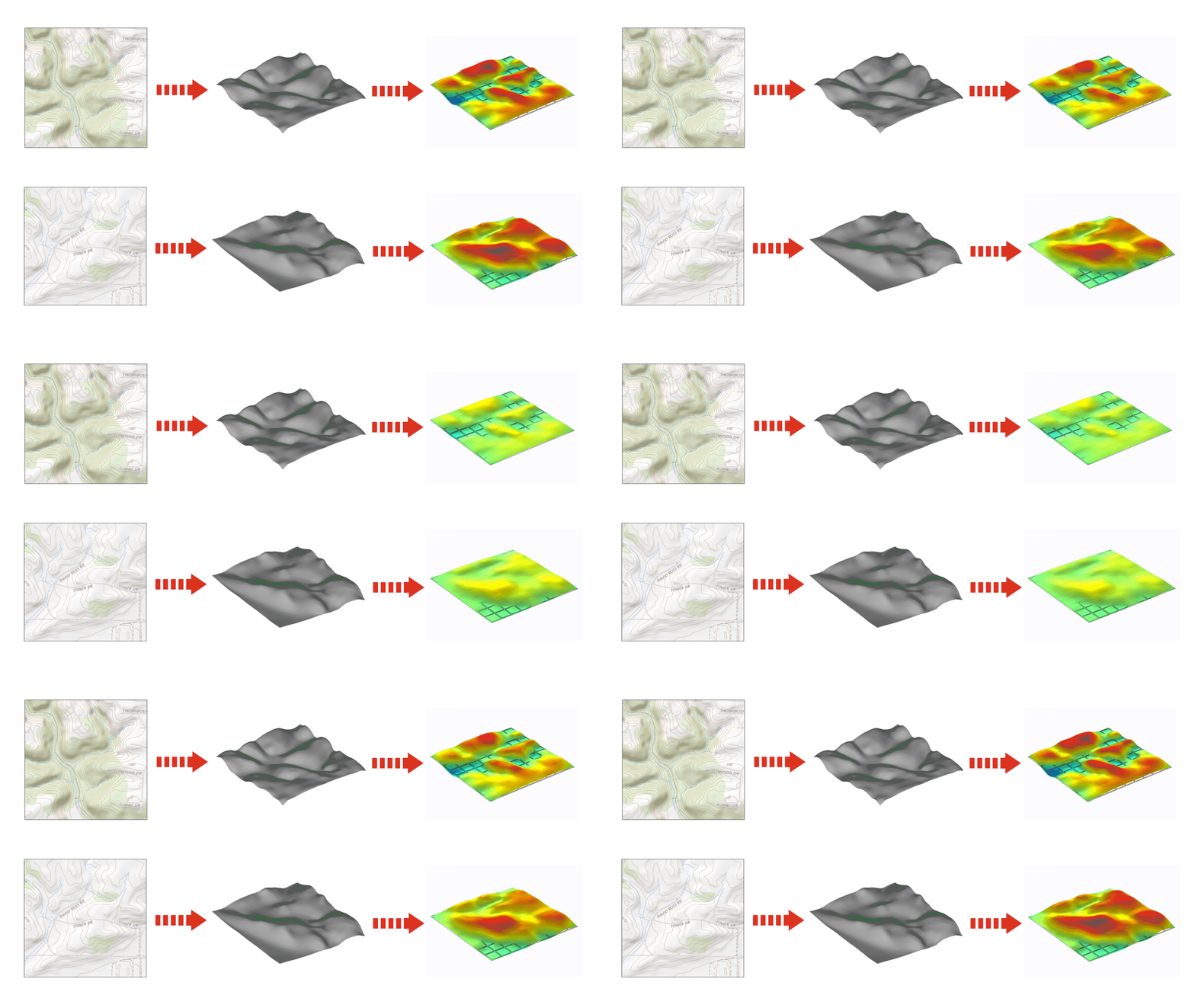 Universal 3D shape-morphing robots